Every living organism on Earth evolved within a specific electromagnetic environment. The fields produced by the planet itself, by the sun, and by atmospheric phenomena are as much a part of our evolutionary context as gravity, oxygen, and the day-night cycle. Understanding this context is essential to appreciating why the electromagnetic environment of a modern bedroom is fundamentally different from anything our biology was shaped to expect.
The Native Electromagnetic Environment
For millions of years, life on Earth developed under a consistent set of natural electromagnetic conditions. These are sometimes called native EMFs — the fields that are native to our evolutionary environment.
The most well-known is the Schumann resonance, a set of standing electromagnetic waves in the cavity between the Earth's surface and the ionosphere. The fundamental frequency is approximately 7.83 Hz, with harmonics at 14.3, 20.8, 27.3, and 33.8 Hz. These resonances are generated by lightning discharges worldwide and have been remarkably stable throughout human evolution. Intriguingly, the Schumann resonance overlaps with the frequency range of human brain waves — particularly the alpha rhythm (8-12 Hz) associated with calm, alert states.
The geomagnetic field is another constant. Earth's static magnetic field (25-65 microtesla, depending on location) has been present throughout the evolution of all life. Many organisms — from bacteria to birds — have developed magnetoreceptors that respond to this field for navigation and orientation. Emerging research suggests that human cells may also possess magnetosensitive structures, though the full implications are still being studied.
Then there is the solar spectrum. Sunlight contains the full electromagnetic spectrum relevant to biology: infrared (which heats tissue and drives cellular water structuring), visible light (which enables vision and sets circadian rhythms), and ultraviolet (which drives vitamin D synthesis and other photobiological processes). Critically, the solar spectrum changes predictably across the day — strong blue frequencies at midday, warmer red and infrared tones at dawn and dusk, and complete darkness at night.
These three elements — Schumann resonance, geomagnetic field, and the solar cycle — constituted essentially the entire electromagnetic environment under which human biology evolved. They are continuous but not constant (varying with time of day and season), analog rather than pulsed, and predominantly low-frequency.
What Changed: The Rise of Non-Native EMF
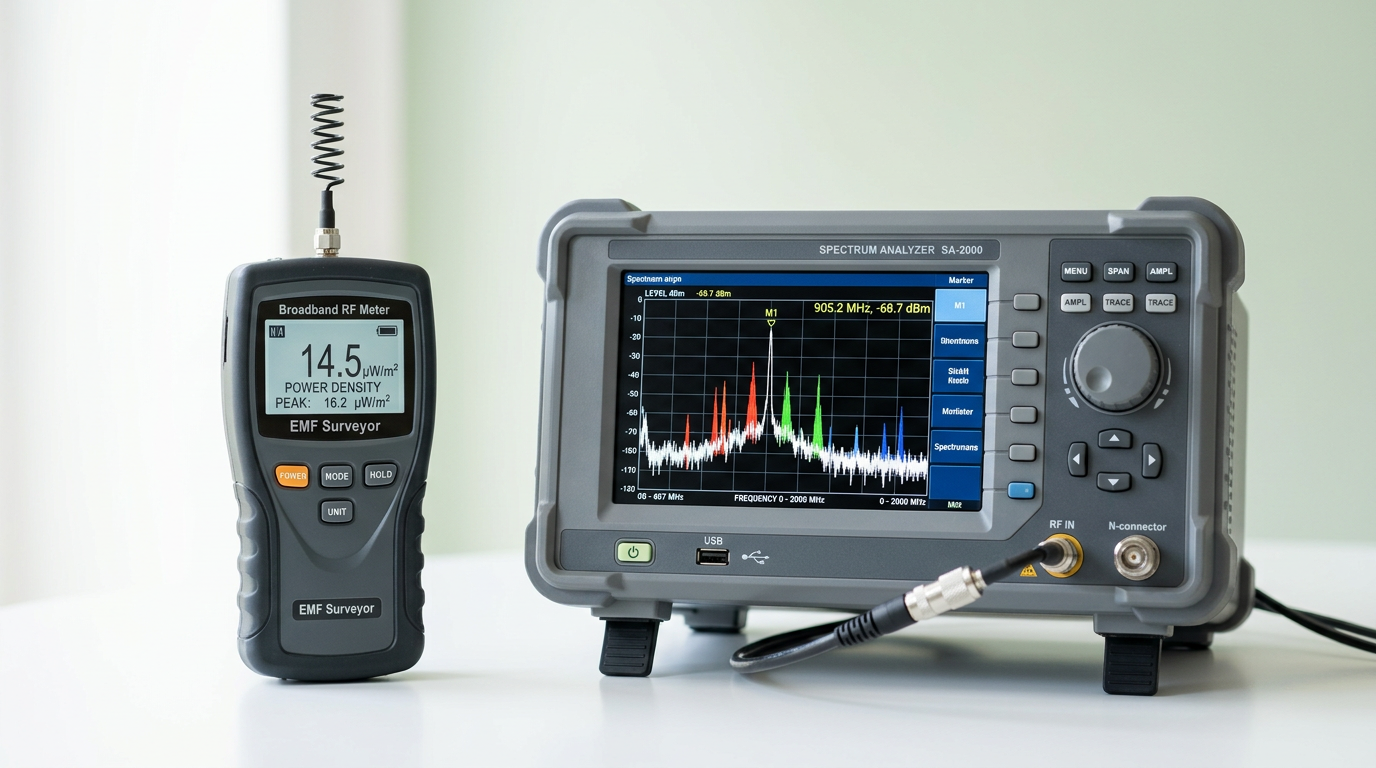
The concept of non-native EMF (nnEMF) refers to electromagnetic fields that did not exist in the environment during human evolution. These are man-made signals that are qualitatively and quantitatively different from anything our biology was calibrated to interact with.
The modern electromagnetic environment includes:
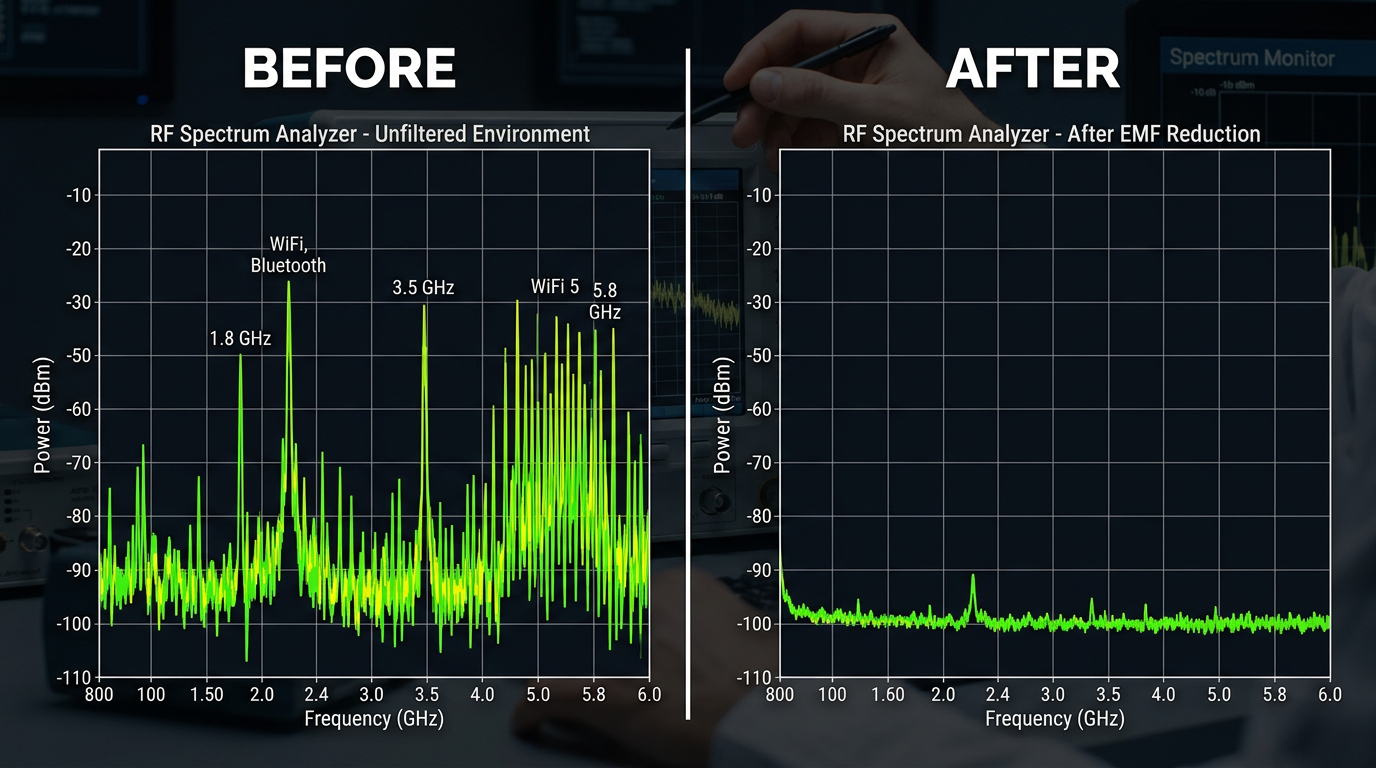
- WiFi (2.4 GHz and 5 GHz) — pulsed digital signals transmitting data in continuous bursts, present 24 hours a day in most homes and public spaces
- Bluetooth (2.4 GHz) — short-range pulsed signals from phones, headphones, wearables, and smart home devices
- Cellular signals (700 MHz to 6 GHz) — transmitted from towers and handsets, with 4G and 5G infrastructure continuously expanding in coverage and density
- Smart meters (900 MHz) — utility meters that transmit usage data wirelessly, often mounted on the exterior wall of bedrooms
- LED lighting (blue-peaked spectrum) — artificial light sources with spectral profiles drastically different from sunlight or fire, emitting concentrated energy in the 435-465 nm blue range
What distinguishes these from native EMFs is not just their frequency but their character. Non-native EMFs are typically pulsed (transmitting in rapid on-off bursts rather than continuous waves), constant (present 24/7 rather than cycling with the sun), and operating at frequencies and intensities that have no analog in the natural world. Some researchers have described modern artificial lighting as an "alien sun" — a light source with a spectral composition fundamentally unlike anything in our evolutionary history.
The Scale of the Change
Robert O. Becker, the orthopedic surgeon and pioneering researcher whose book The Body Electric (1985) helped establish the field of bioelectromagnetics, noted that the ambient electromagnetic environment had already changed dramatically by the mid-twentieth century. He documented how the human body's own electrical systems — used for wound healing, bone growth, and nervous system function — operated in an environment increasingly filled with man-made signals.
Since Becker's time, the change has accelerated exponentially. The introduction of WiFi (commercially available since 1997), Bluetooth (1999), 3G cellular (2001), 4G LTE (2009), and 5G (2019) means that the average ambient RF power density in populated areas has increased by orders of magnitude within a single generation. Many people now live in environments where the man-made electromagnetic background is millions of times stronger than the natural one.
This does not automatically mean harm. But from an evolutionary biology perspective, it represents a genuinely unprecedented change in a fundamental environmental parameter — one that happened far too rapidly for any biological adaptation to occur.
Why the Bedroom Is the Priority
If you accept the premise that reducing exposure to non-native EMFs is a reasonable precaution, the question becomes: where do you start? The answer, for most people, is the bedroom — and for a clear reason.
During sleep, you spend approximately eight continuous hours in a single electromagnetic environment. This is the longest sustained exposure period in your day. It is also the period when your body is engaged in its most critical repair and regeneration activities: tissue repair, immune function, memory consolidation, hormonal regulation, and metabolic restoration.
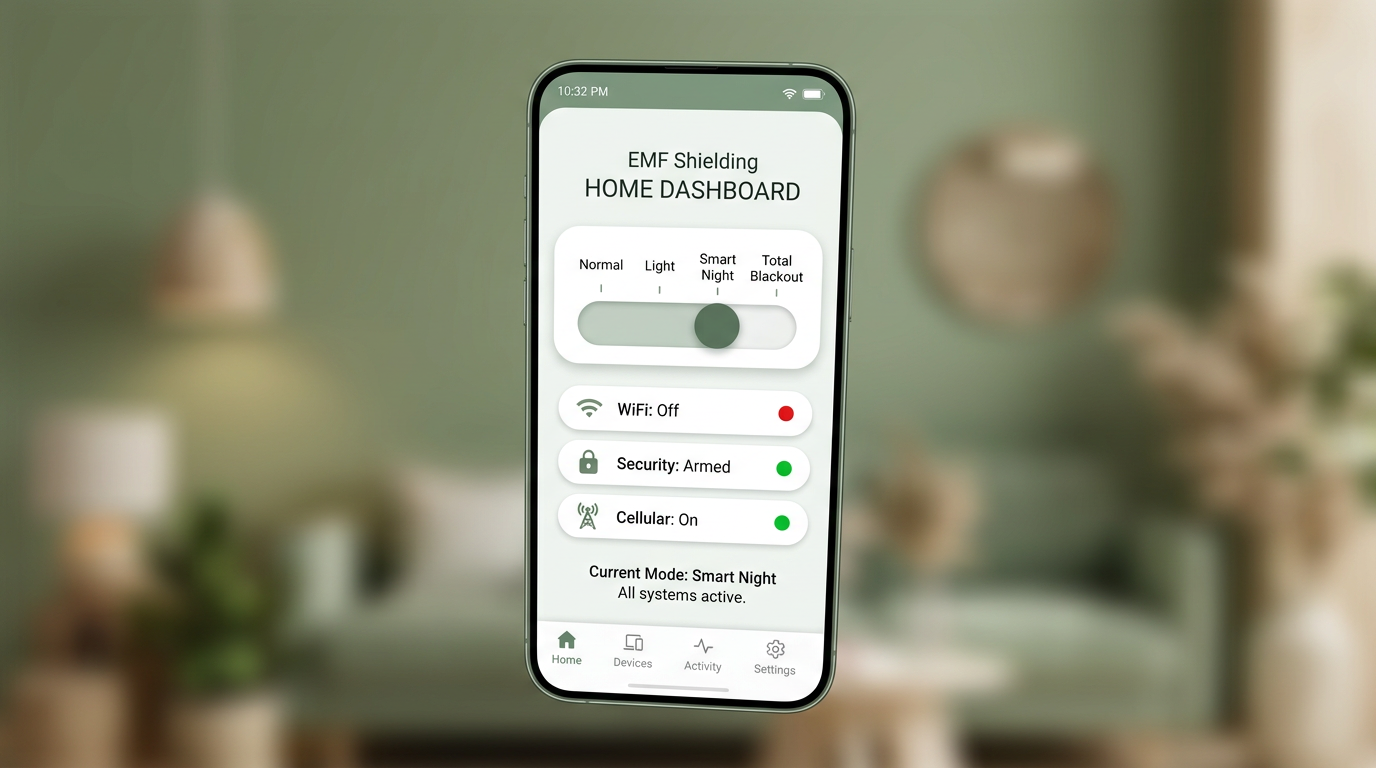
Sleep is the one time when you are not actively using wireless technology. You don't need WiFi while you're unconscious. You don't need Bluetooth. You don't need cellular connectivity (your phone alarms work in airplane mode). This means that the bedroom offers the highest return on intervention: you can dramatically reduce nnEMF exposure during your most vulnerable hours without sacrificing any functionality during waking life.
The Practical Perspective
The concept of non-native EMF is not about rejecting technology or returning to a pre-electric lifestyle. It is about recognizing the mismatch between our evolved biology and our modern electromagnetic environment — and making informed choices about where and when to reduce that mismatch.
The most practical application of this understanding is simple: create a sleep environment that more closely resembles the electromagnetic conditions under which human sleep biology evolved. That means darkness (as it would be after sunset in a pre-electric world), quiet (low acoustic noise), and low electromagnetic interference (minimal nnEMF from wireless devices).
You don't need to eliminate all technology from your life. You don't need to fear your WiFi router during the day. But giving your body eight hours of reduced nnEMF exposure every night — during the period when it matters most and costs you least — is a simple, proportionate response to a genuinely novel environmental factor.
Key Takeaways
- Humans evolved under specific native EMFs: the Schumann resonance (~7.83 Hz), the geomagnetic field, and the natural solar spectrum
- Non-native EMFs — WiFi, Bluetooth, cellular, smart meters, and LED blue light — are pulsed, constant, and historically unprecedented
- The ambient electromagnetic environment has increased by orders of magnitude within a single generation
- Robert O. Becker's foundational research documented the body's own bioelectric systems and their interaction with the electromagnetic environment
- The bedroom represents 8 continuous hours of exposure during the body's most critical repair period
- Reducing nnEMF during sleep requires no daytime lifestyle changes — it's the highest-return, lowest-cost intervention available