WiFi has become so ubiquitous that most of us never think about the router blinking quietly in the corner. But a growing body of peer-reviewed research has begun to examine what happens when we sleep in close proximity to WiFi signals — and the findings are worth understanding.
This article reviews the most relevant human studies on WiFi exposure during sleep, explains what they found, and offers practical context for homeowners who want to make informed decisions.
The First Human Experimental Study
In 2020, Danker-Hopfe et al. published a landmark study in the International Journal of Hygiene and Environmental Health. It was the first controlled human experimental study specifically designed to examine the effects of WiFi router emissions on sleep.
The study enrolled 34 healthy men and exposed them to signals from a standard WiFi router during sleep in a laboratory setting. Using polysomnography (the gold standard for sleep measurement, which records brain waves, eye movement, muscle activity, and heart rhythm), the researchers measured multiple sleep parameters across exposure and sham nights.
The key finding: exposure to WiFi signals during sleep was associated with changes in EEG alpha power during NREM (non-rapid eye movement) sleep. Alpha waves are brain oscillations typically associated with a relaxed but awake state. Their presence during deep sleep suggests a lighter, less restorative sleep pattern — the brain isn't fully settling into the deeper stages.
The authors were careful to note that these were subclinical changes — meaning participants didn't necessarily report feeling worse — but the objective brain-wave data showed a measurable physiological shift. This distinction is important: even when subjective experience seems unchanged, the body's electrical activity may be responding to the electromagnetic environment.
The 2024 Double-Blind Pilot Study
Four years later, Bijlsma et al. (2024) published a pilot study in Frontiers in Public Health that took a different approach. This was a double-blind, randomized controlled trial — the most rigorous study design available — focused specifically on 2.45 GHz exposure (the primary frequency band used by WiFi routers) during sleep.
Participants slept in controlled conditions where they were exposed to either real or sham WiFi signals, without knowing which nights were which. The researchers assessed both objective sleep metrics and subjective sleep quality.
The result: participants reported significantly reduced subjective sleep quality on nights when they were exposed to real 2.45 GHz signals. Because neither the participants nor the researchers conducting the assessments knew which condition was active on any given night, this finding controls for the placebo effect and experimenter bias.
This is a meaningful result. Critics of EMF research often point to the nocebo effect — the idea that people who believe wireless signals harm them will report feeling worse regardless of actual exposure. The double-blind design directly addresses this concern.
Baby Monitors and Other Overlooked Sources
One of the most common bedroom RF sources that families overlook is the baby monitor. Many modern baby monitors transmit on the 2.45 GHz band — the same frequency studied in both the Danker-Hopfe and Bijlsma research. These devices are often placed within a few feet of sleeping infants and parents alike, transmitting continuously throughout the night.
Other common bedroom sources include:
- Mesh WiFi nodes — often placed in hallways or bedrooms for coverage, transmitting at full power 24/7
- Smart speakers — constantly listening for wake words via WiFi and Bluetooth
- Smart TVs — maintaining WiFi connections even in standby mode
- Wireless charging pads — generating near-field electromagnetic energy at the nightstand
- Bluetooth devices — fitness trackers, sleep trackers (ironically), and wireless headphones
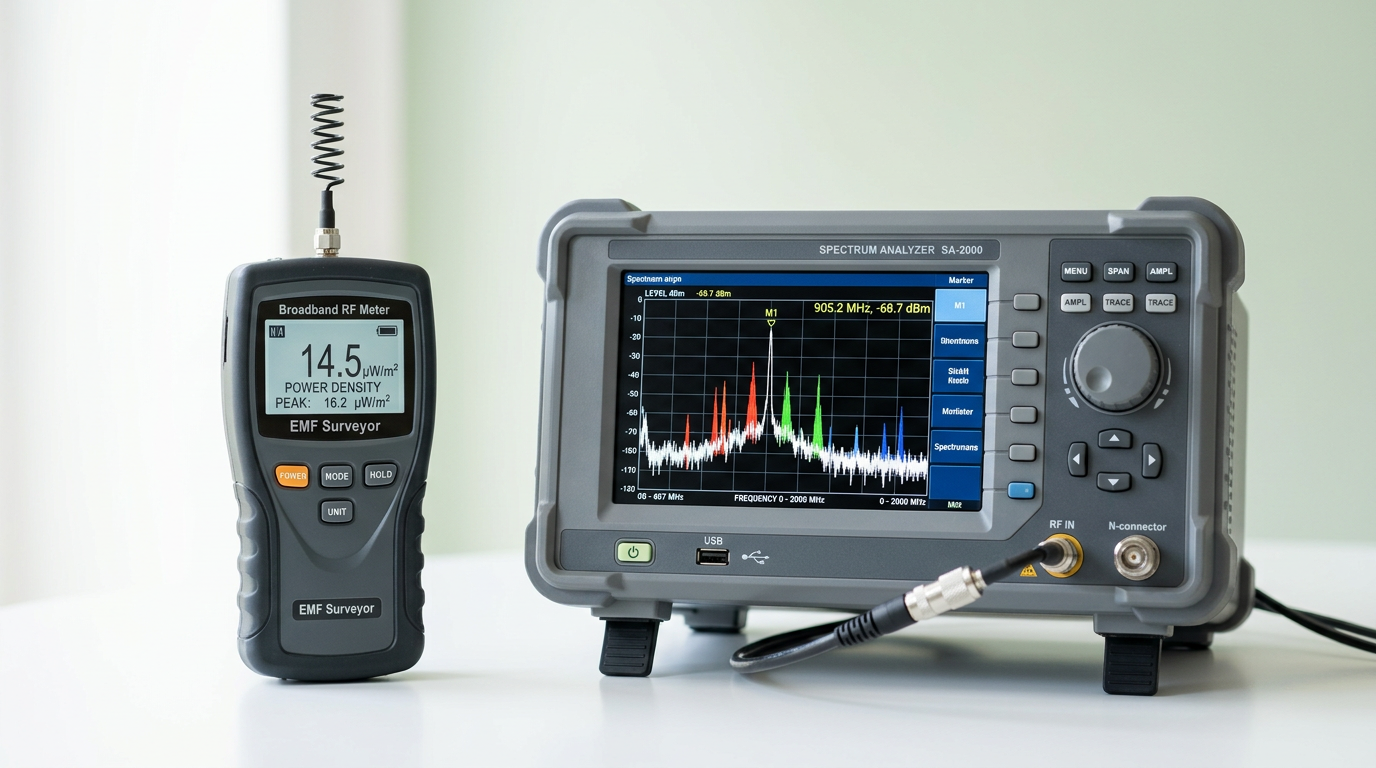
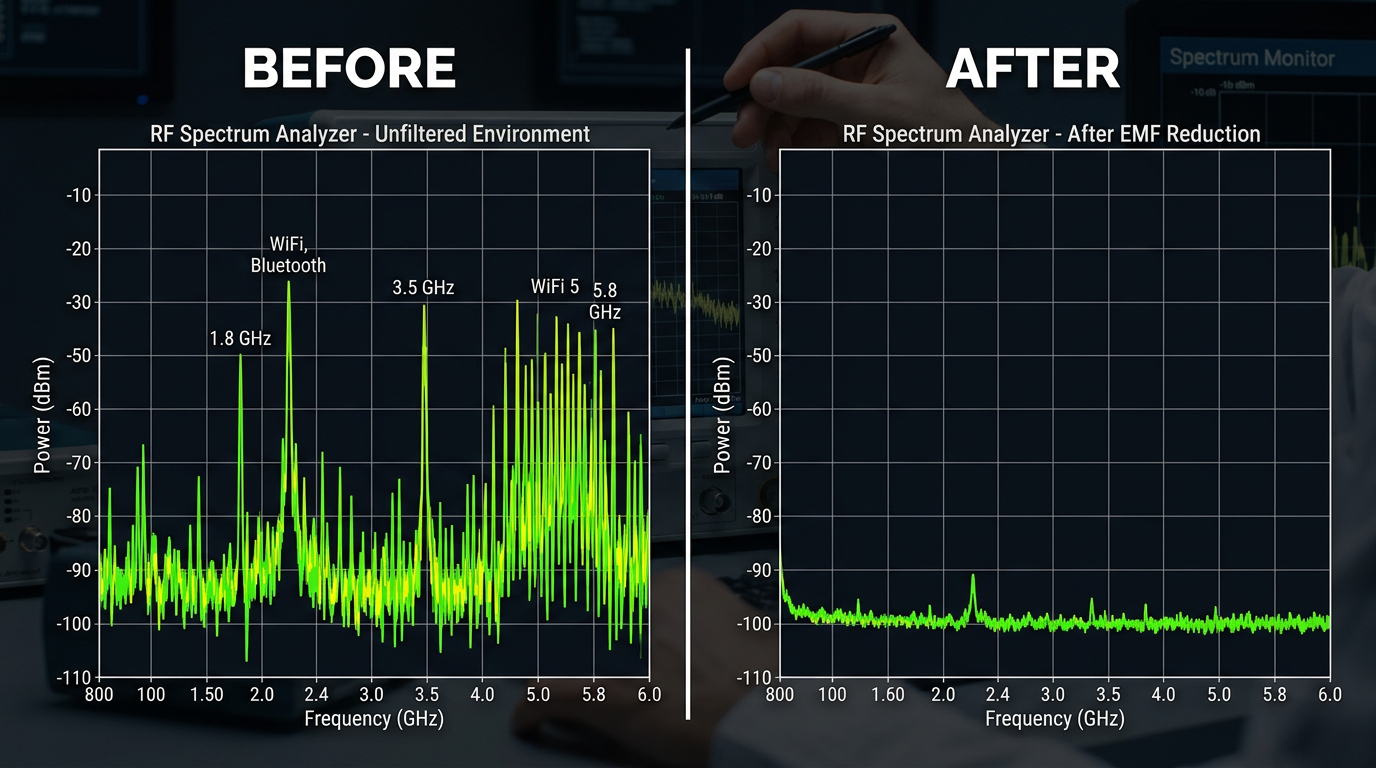
Each of these contributes to the total RF power density in the sleep environment. While any single device may produce modest levels, the cumulative effect of multiple wireless devices in a small room can be significant.
Putting It in Context
It's important to be balanced about what these studies tell us. The Danker-Hopfe study found EEG changes but not changes in self-reported sleep quality. The Bijlsma study found subjective changes in a pilot-sized sample. Neither study found dramatic health effects, and the broader scientific literature on RF and sleep contains studies with mixed results.
What these studies do establish is that WiFi exposure during sleep is not biologically inert. The brain responds to 2.45 GHz signals in measurable ways. Whether those responses translate to meaningful health impacts for every person is still being investigated.
The Practical Takeaway
Here's what makes this topic actionable rather than anxiety-inducing: reducing WiFi exposure during sleep is one of the lowest-cost, highest-benefit interventions available to any homeowner.
Consider the asymmetry:
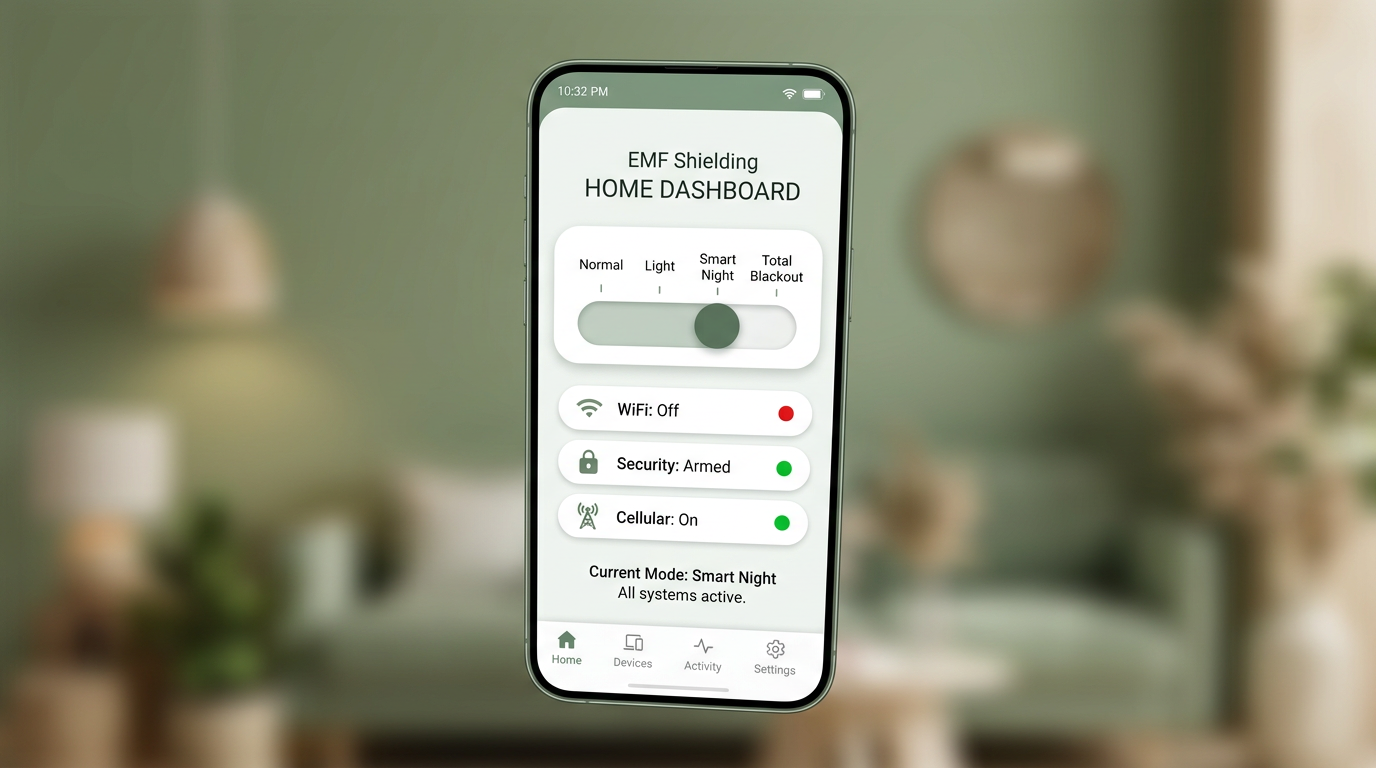
- Cost of reducing nighttime WiFi: A smart plug costs $15-25. A Home Assistant automation is free to set up. Putting your phone in airplane mode costs nothing.
- Downside of reducing nighttime WiFi: Essentially none, if done correctly. Smart home security can be maintained through cellular backup or wired connections. Morning connectivity resumes automatically.
- Potential upside: Improved sleep quality, reduced cumulative RF exposure during the most restorative hours of the day, and alignment with the precautionary principle endorsed by many health organizations.
You don't need to wait for a definitive scientific verdict to take a sensible, low-cost step toward a cleaner sleep environment. The research supports the plausibility of the benefit, and the cost of action is negligible.
Key Takeaways
- The first human experimental study (2020) found EEG alpha power changes during NREM sleep with WiFi exposure
- A 2024 double-blind RCT found significantly reduced subjective sleep quality with 2.45 GHz exposure
- Baby monitors, mesh nodes, and smart devices all contribute to bedroom RF levels
- The evidence base is growing but not yet definitive — balance is appropriate
- Reducing nighttime WiFi is low-cost, low-effort, and carries no practical downside