If you've ever looked at an EMF report and seen the unit μW/m² (microwatts per square meter), you may have wondered what it actually means — and whether the number you're seeing is something to pay attention to. This article breaks it down in plain language, with a focus on the one room where it matters most: the bedroom.
What Is RF Power Density?
Radio-frequency (RF) power density is a measure of how much wireless energy passes through a given area. Think of it like rain: if you hold up a one-square-meter sheet in a rainstorm, power density tells you how much "rain" (electromagnetic energy) hits that sheet every second. The unit μW/m² — microwatts per square meter — is simply one millionth of a watt spread across one square meter.
Every device that communicates wirelessly contributes to the RF environment in your home. WiFi routers, cordless phones, baby monitors, Bluetooth speakers, smart home hubs, and cell towers outside all add to the total power density your body is immersed in at any given time.
Typical Bedroom Levels
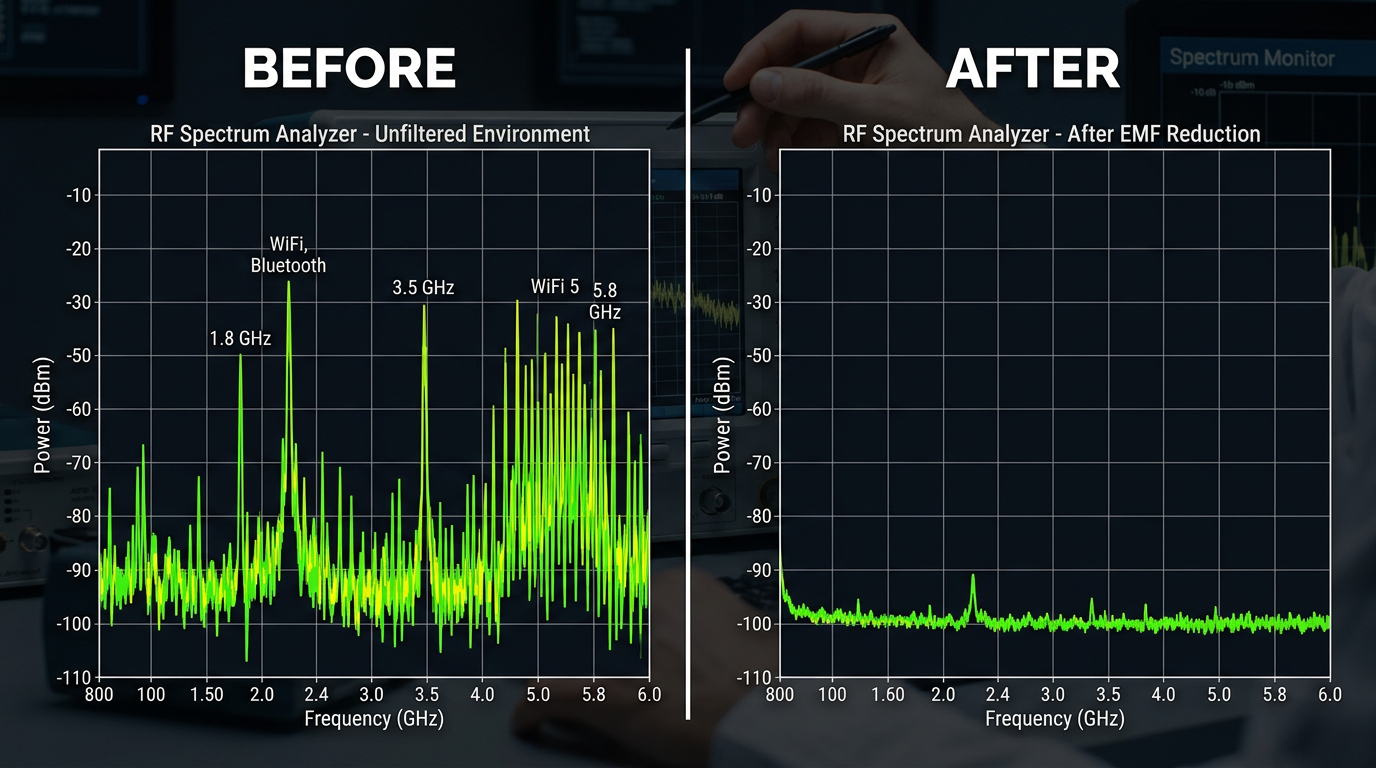
In an average suburban home with a WiFi router and a few smart devices, bedroom RF power density often measures between 10 and 500 μW/m². Homes with mesh WiFi systems, where access points are placed in or near bedrooms, frequently register higher — sometimes 1,000 μW/m² or more at pillow level.
For context, many building biologists reference the SBM (Standard of Building Biology Measuring Techniques) guidelines, which suggest levels below 10 μW/m² as "no concern" for sleeping areas, and levels above 1,000 μW/m² as "extreme concern." These are precautionary guidelines, not regulatory limits — but they offer a useful framework for thinking about nighttime exposure.
Why Sleep Hours Matter Most
Sleep is when your body repairs tissue, consolidates memory, and regulates hormones. It's also the longest continuous period you spend in one location — typically 7 to 9 hours in the same room, often within a few feet of the same devices. That means your bedroom RF environment isn't a fleeting exposure; it's a sustained one.
Consider the math: if you sleep 8 hours per night, that's one-third of your entire day spent in the same electromagnetic environment. Over a year, that adds up to roughly 2,900 hours. Even if daytime exposure is unavoidable, reducing nighttime exposure is one of the simplest interventions available — and it requires no lifestyle changes during waking hours.
What the Research Shows
The relationship between RF exposure and sleep is an active area of scientific inquiry. Here's what the most relevant studies have found:
A 2024 double-blind randomized controlled trial by Bijlsma et al., published in Frontiers in Public Health, exposed participants to 2.45 GHz signals (the same frequency used by standard WiFi routers) during sleep. The study found that participants reported significantly reduced subjective sleep quality during exposure nights compared to sham exposure nights. This is notable because the double-blind design controls for expectation effects — participants didn't know which nights involved real exposure.
A 2025 study investigating the CACNA1C genotype added a new dimension to this research by finding that genetic variation in voltage-gated calcium channels may influence how individuals respond to RF exposure. This suggests that sensitivity to wireless signals isn't uniform — some people may be more affected than others based on their genetic makeup.
It's important to maintain perspective. The WHO's systematic review of RF and health outcomes has found mixed results across studies, with many showing no statistically significant effects. The science is not settled, and responsible interpretation means acknowledging that.
The Precautionary Principle
Given the current state of the evidence, many health-conscious homeowners are adopting the precautionary principle: when the potential downside is low-cost and low-effort, and the potential upside is meaningful, it makes sense to act before waiting for scientific consensus.
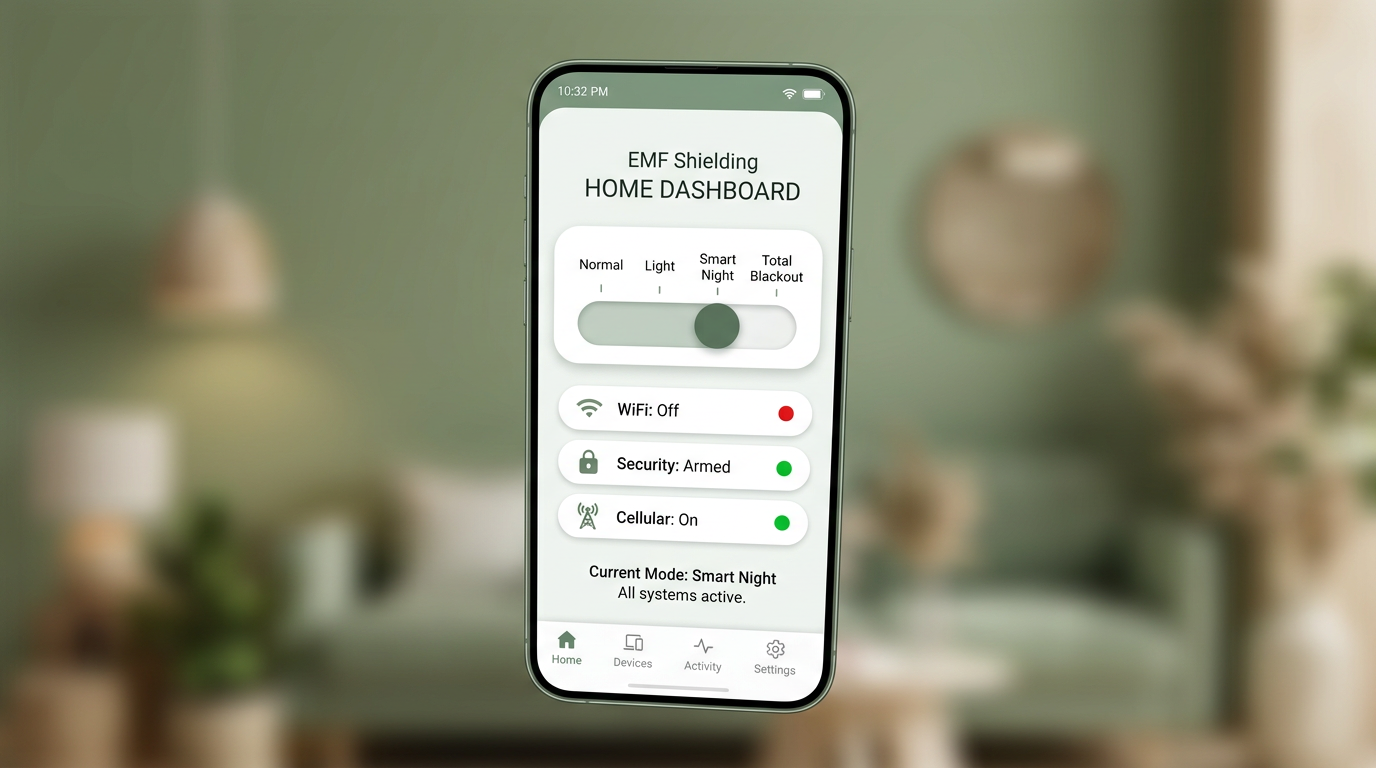
Reducing RF power density in your bedroom during sleep hours fits this framework well. The interventions are simple — turning off a router, putting devices in airplane mode, removing unnecessary wireless devices from the nightstand. There's no downside to these actions, and the potential benefit to sleep quality is supported by an emerging body of peer-reviewed research.
How to Find Out Your Levels
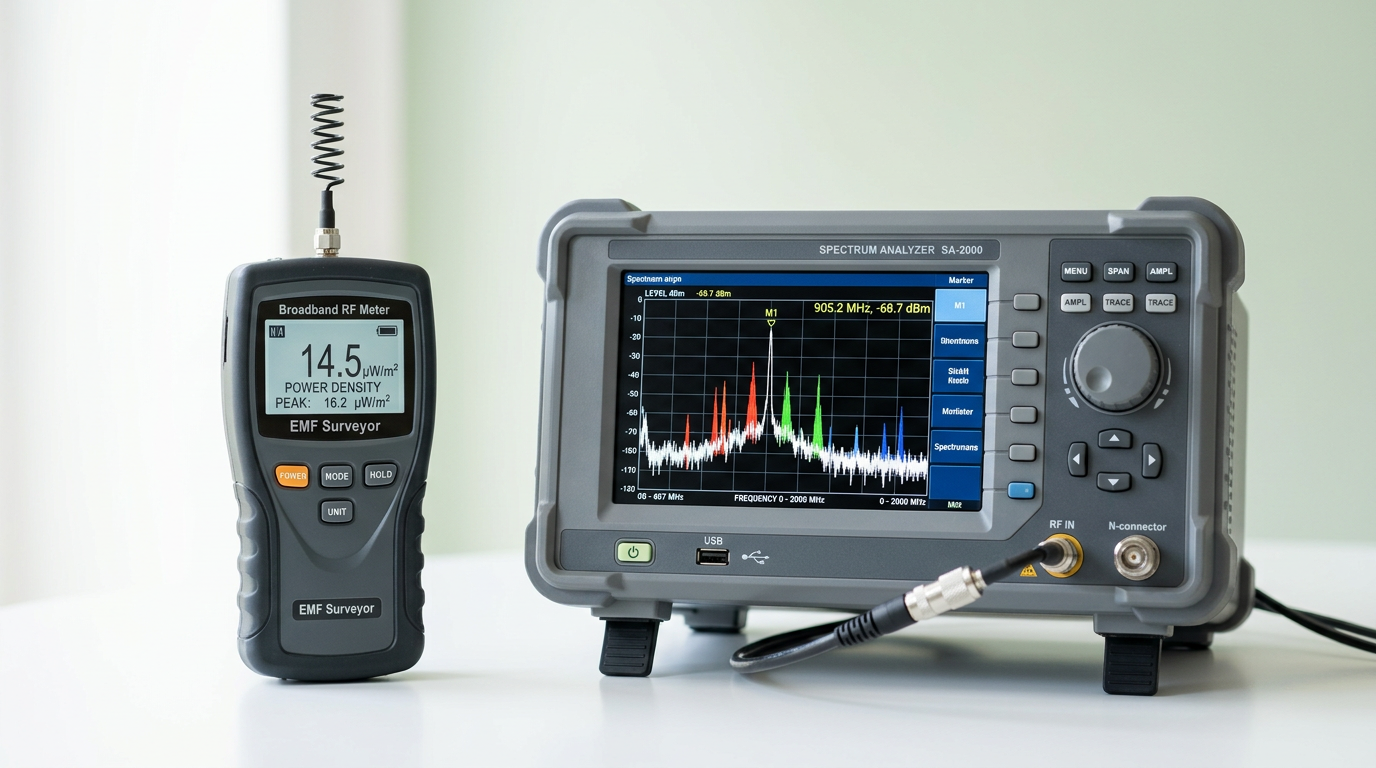
You can't assess your bedroom's RF power density by guessing. A proper measurement requires at least a calibrated broadband RF meter, and ideally a spectrum analyzer to identify which devices are contributing to the total. A professional assessment gives you a baseline number, identifies the sources, and provides a clear path to reduction.
The goal isn't zero exposure — it's informed, practical reduction. When you know your numbers, you can make proportionate decisions about what to change, and you can verify the results after changes are made.
Key Takeaways
- RF power density (μW/m²) measures the wireless energy passing through your environment
- Bedroom levels in typical homes range from 10 to 1,000+ μW/m², depending on device placement
- Sleep represents 8 continuous hours of exposure — the longest sustained period in any single room
- Peer-reviewed studies have found measurable effects on sleep quality from 2.45 GHz exposure
- Genetic variation may influence individual sensitivity to RF signals
- The precautionary principle supports low-cost nighttime reduction as a sensible step