In public health, there is a recurring pattern that plays out over decades. A new technology or substance is introduced. Early researchers raise questions about potential health effects. Industry and regulatory bodies call for more evidence. Years pass — sometimes decades — before the evidence becomes overwhelming enough to prompt action. By that time, millions of people have been exposed. The question we should ask is not whether this pattern exists — it demonstrably does — but whether we can make smarter individual decisions without waiting for that cycle to complete.
What Is the Precautionary Principle?
The precautionary principle is a framework for decision-making under uncertainty. In its simplest form, it states: when an activity raises threats of harm to human health or the environment, precautionary measures should be taken even if some cause-and-effect relationships are not fully established scientifically.
This does not mean acting on fear or speculation. It means making proportionate, reasonable choices when the potential downside of inaction is significant and the cost of precaution is low. It is a principle of prudence, not panic.
The precautionary principle is formally recognized in international law (the 1992 Rio Declaration on Environment and Development), in European Union regulatory policy, and in the guidelines of numerous public health organizations. It is the reasoning behind food safety standards, environmental regulations, and pharmaceutical testing protocols. We apply it constantly in everyday life — you don't need proof that your house will burn down to install smoke detectors.
Historical Precedent: The Cost of Waiting
The history of environmental health is, in many ways, a history of delayed action. Consider a few well-documented cases:
Asbestos: The first reports linking asbestos to lung disease appeared in the early 1900s. By the 1930s, the connection to asbestosis was well established. Yet widespread regulatory action did not occur until the 1970s and 1980s — and asbestos is still not fully banned in the United States today. During those intervening decades, millions of workers and building occupants were exposed to a known carcinogen.
Lead paint: The toxicity of lead was recognized by ancient Romans. By the 1920s, researchers had clearly linked lead paint to childhood poisoning. The paint industry fought regulation for decades, funding studies designed to cast doubt on the evidence. Lead paint was not banned for residential use in the U.S. until 1978 — and lead exposure continues to affect children in older homes today.
Tobacco: Internal tobacco industry documents from the 1950s show that companies knew smoking caused cancer. For the next four decades, the industry manufactured doubt through funded research, expert witnesses, and public relations campaigns. The regulatory response lagged the private knowledge by at least 30 years.
In each case, the pattern is the same: early evidence, industry resistance, regulatory delay, and eventual confirmation that the early evidence was correct. The cost of waiting was borne not by the industries or regulators but by the people who were exposed.
The Current EMF Debate
The question of whether non-thermal electromagnetic fields affect human health is currently in what might be called the "early evidence, active debate" phase. Here is where the major positions stand:
The mainstream regulatory position: The International Commission on Non-Ionizing Radiation Protection (ICNIRP), whose guidelines are adopted by most countries, maintains that the only established mechanism for RF health effects is tissue heating. Their 2020 guidelines set exposure limits designed to prevent thermal effects and state that the evidence for non-thermal biological effects is insufficient to warrant lower limits.
The WHO systematic review: The World Health Organization has been conducting systematic reviews of RF and health outcomes. Their most recent assessments acknowledge significant research gaps, particularly regarding chronic exposure, overnight exposure, and effects on vulnerable populations. The WHO classifies RF electromagnetic fields as "possibly carcinogenic to humans" (Group 2B) — the same category as lead and DDT when they were at similar stages of evidence development.
The NTP study: The U.S. National Toxicology Program completed a $30 million study on radiofrequency radiation and cancer in 2018. The study found "clear evidence" of heart tumors (schwannomas) and "some evidence" of brain tumors in male rats exposed to cell phone-level RF signals. This was the most comprehensive and expensive toxicology study ever conducted on RF radiation. Its findings were peer-reviewed and confirmed by an external panel of experts.
The BioInitiative Report: This independent review, compiled by an international working group of scientists, documents over 1,800 peer-reviewed studies reporting biological effects from EMF at levels below current regulatory limits. The report has been updated multiple times and provides a comprehensive (though not universally accepted) overview of the non-thermal effects literature.
The CACNA1C genotype research: The 2025 study by Sousouri and colleagues demonstrated that genetic variation in voltage-gated calcium channels influences individual neural responses to RF exposure. This finding suggests that population-wide studies may underestimate effects on genetically susceptible subgroups — a critical consideration for regulatory policy based on average responses.
The Asymmetry of Risk
The precautionary principle is most compelling when there is a clear asymmetry between the cost of precaution and the cost of inaction. In the case of bedroom EMF reduction, this asymmetry is striking:
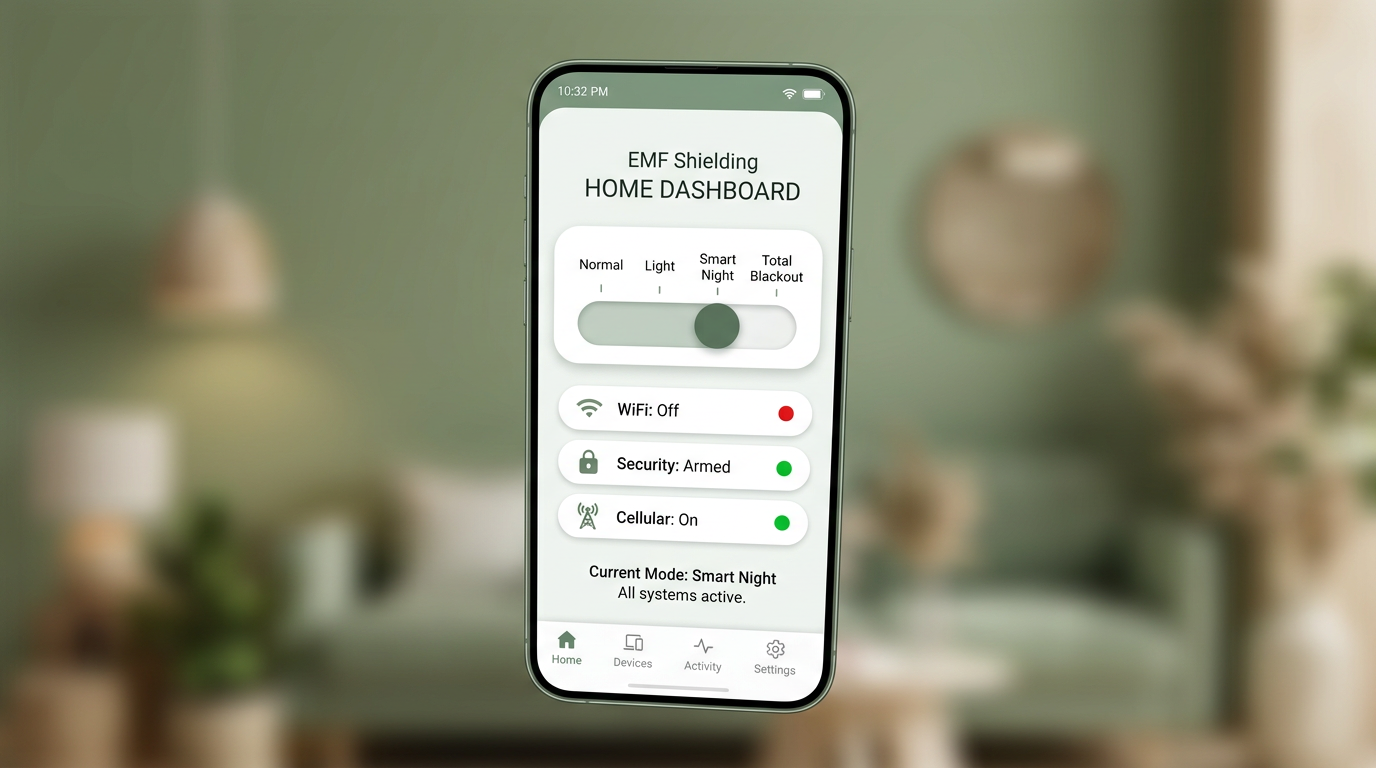
- Cost of precaution: Turning off WiFi at night (free), putting your phone in airplane mode (free), removing wireless devices from the nightstand (free), using a smart plug timer ($15-25), or investing in a professional assessment and automation system (a one-time cost with lasting benefit).
- Downside of precaution: Effectively zero. You don't need WiFi while you sleep. Your morning connectivity returns automatically. No lifestyle impact during waking hours.
- Potential benefit of precaution: Improved sleep quality, reduced oxidative stress during the repair window, support for melatonin production, and reduced cumulative exposure over thousands of hours per year.
- Cost of inaction (if non-thermal effects are eventually confirmed): Years or decades of unnecessary overnight exposure during the most vulnerable biological period, with potential cumulative effects that are difficult to reverse.
When the cost of action is negligible and the potential benefit is meaningful, the rational decision is to act — regardless of whether the science is "settled."
Our Approach: Measure, Reduce, Verify
At EMF Shield, we don't ask anyone to take our word for anything. Our approach is grounded in three steps that anyone can understand and verify:
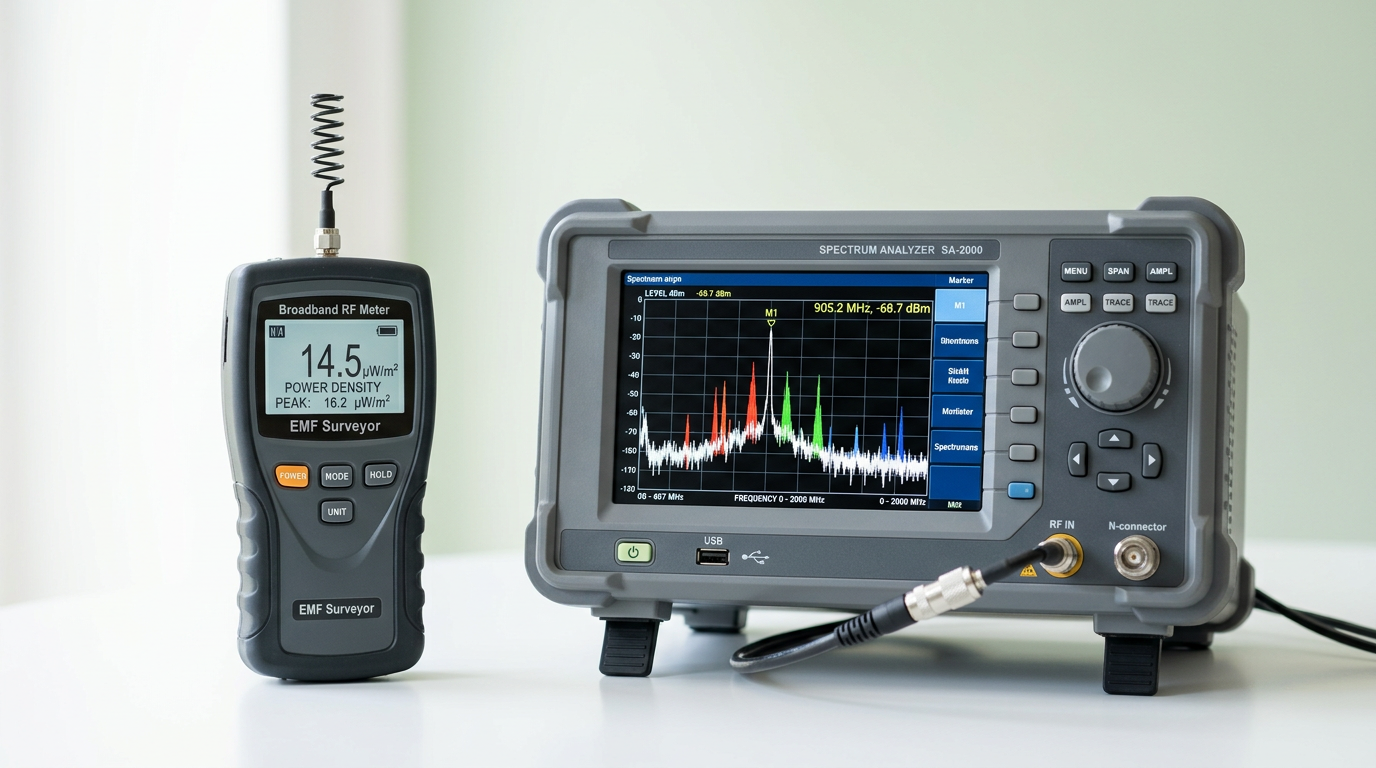
- Measure: We use calibrated instruments to document exactly what's in your bedroom's electromagnetic environment. No guessing, no assumptions — just data.
- Reduce: We implement targeted, proportionate interventions based on what the measurements reveal. We address the actual sources, not theoretical ones.
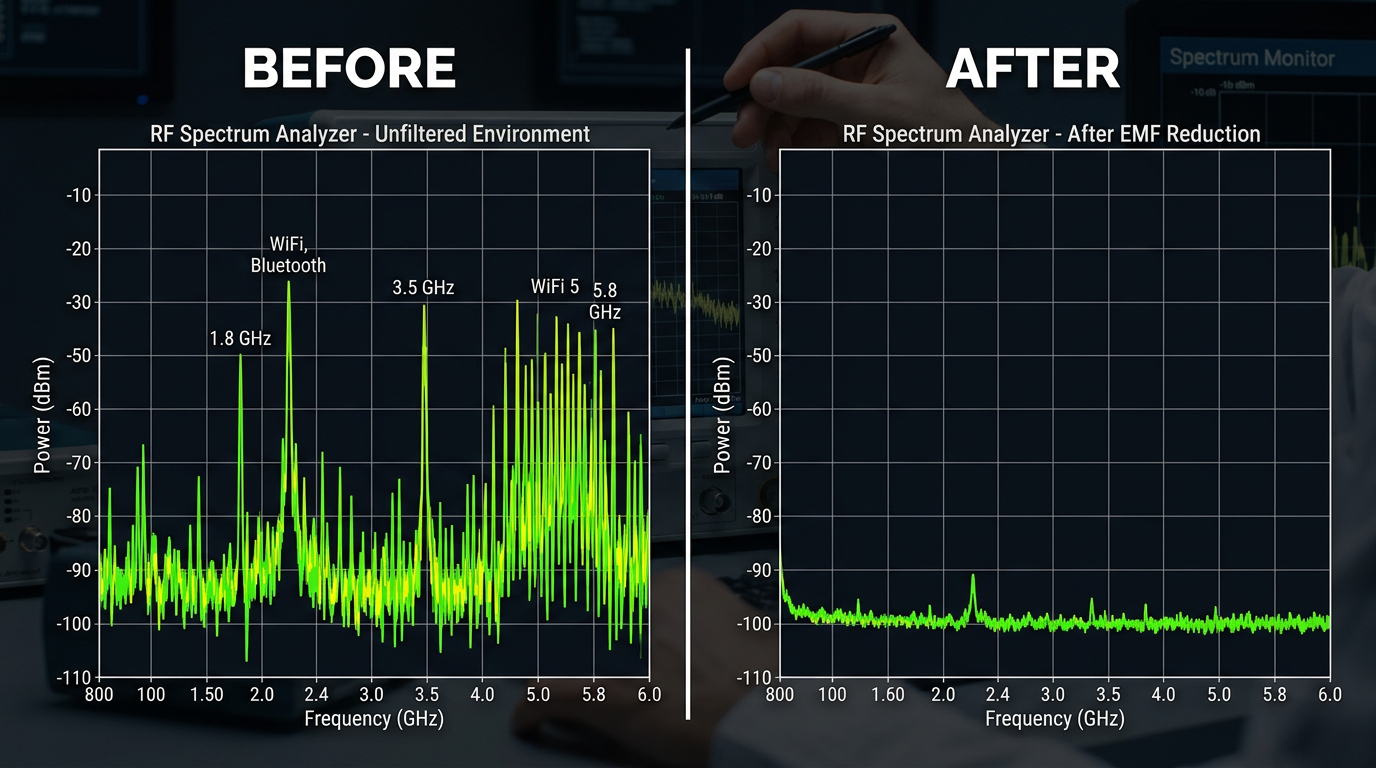
- Verify: We re-measure after every intervention to confirm the reduction and provide before-and-after documentation. The results are transparent and objective.
This is not about fear. It's not about living in a Faraday cage or abandoning modern technology. It's about making an informed, proportionate decision to reduce an environmental exposure during the hours when it's easiest to reduce and when your body may benefit most.
The smoke detector analogy is apt. You install smoke detectors not because you believe your house is about to burn down, but because the cost of installation is trivial compared to the cost of being unprepared. You hope the detector never goes off. But you're glad it's there.
Reducing EMF in your bedroom is the same kind of decision. Low cost, zero downside, potentially significant upside. You don't need to wait for perfect science to make a smart choice.
Key Takeaways
- The precautionary principle supports proportionate action when the cost of precaution is low and the potential benefit is meaningful
- History shows that waiting for absolute scientific proof — as with asbestos, lead paint, and tobacco — has repeatedly come at a high human cost
- The current EMF debate features credible evidence on both sides: regulatory bodies maintain a thermal-effects-only position, while a growing body of research documents non-thermal biological effects
- The NTP study found "clear evidence" of tumors from RF exposure; the BioInitiative Report documents 1,800+ studies showing effects below current limits
- Genetic variation (CACNA1C) suggests that sensitivity to EMF is not uniform across the population
- Reducing bedroom EMF during sleep is a textbook case for precautionary action: negligible cost, zero downside, and potentially meaningful benefit
- Our approach — measure, reduce, verify — is grounded in data, not fear