Some people walk into a room full of wireless devices and feel nothing unusual. Others report that they feel off, overstimulated, tired, wired, headachy, foggy, or unable to settle. That difference in lived experience is one reason conversations about EMF sensitivity remain so charged.
The science is still debated. Even the terminology is debated. The World Health Organization's overview of electromagnetic hypersensitivity notes that the symptoms people describe are real and can be disabling, while also saying there is no accepted diagnostic criterion and no clear scientific basis linking the symptoms to EMF exposure itself. Likewise, the widely cited systematic review by Rubin and colleagues concluded that provocation studies generally did not show that self-identified sensitive individuals could detect EMF exposure more accurately than chance.
And yet the story does not end there. More recent work continues to explore whether certain subgroups may respond differently, whether sleep can be affected under specific conditions, and whether autonomic or sensory hyper-reactivity might help explain why some people feel more vulnerable than others. For example, the 2024 pilot study by Bijlsma et al. reported reduced subjective sleep quality during experimental radiofrequency exposure nights, while the human sleep study by Bueno-Lopez, Eggert, Dorn, Schmid, Hirtl, and Danker-Hopfe explored how 2.45 GHz WiFi exposure may interact with sleep-dependent memory consolidation.
The fairest conclusion is not "case closed" in either direction. It is that some people clearly experience this issue as meaningful, the evidence remains mixed, and the home environment is still something you can control whether or not you identify as sensitive.
The Hypersensitive Few
Some individuals seem more reactive to environmental inputs in general. That can show up with scent, noise, light, chemicals, stress, or changes in routine. It is not difficult to imagine why this conversation spills over into wireless exposure as well.
The WHO notes that the symptom clusters attributed to EMF often overlap with other poorly understood environmental intolerance patterns, including multiple chemical sensitivity. In that sense, the question is not only "is EMF the cause?" but also "why might one nervous system feel more burdened than another under the same environmental conditions?"
That distinction matters. It allows a more thoughtful discussion than the usual all-or-nothing fight. Instead of forcing the issue into "real" versus "imagined," it opens a more practical question: are some people living with a level of sensory, autonomic, inflammatory, or neurologic strain that makes modern environments feel harder to tolerate?
Toxins And Dysregulation
This is where the conversation widens. Many homeowners who describe themselves as EMF-sensitive are not talking about EMF in isolation. They are talking about a body that already feels overloaded.
Conditions often mentioned in this context include:
- mold toxicity
- post-viral syndromes such as Long Covid
- spike protein-related issues discussed after Covid-19 infection or vaccination
- chronic Lyme disease
- multiple chemical sensitivity
- traumatic brain injury, including concussion history
- chronic stress or burnout
- autoimmune disorders such as multiple sclerosis
Listing those conditions does not mean NoWiFi.Rest diagnoses them, treats them, or claims that EMF is their cause. It means that people living with nervous-system strain, immune dysregulation, autonomic disruption, or sensory amplification often describe themselves as more reactive to the world around them.
There is literature that makes this broader vulnerability framework easier to understand. Reviews of Long Covid have documented substantial autonomic involvement, including the 2024 scoping review on treatments for Long COVID autonomic dysfunction and the more recent systematic review and meta-analysis of neurocardiac autonomic dysfunction in post-COVID condition. The American Heart Association scientific statement on cardiac arrhythmias and autonomic dysfunction associated with COVID-19 likewise describes autonomic disruption as an active area of concern and study.
Multiple chemical sensitivity has long been discussed in a similar way: patients report real symptoms at low levels of exposure, while medicine continues debating mechanism, categorization, and overlap with other syndromes. A classic review is Ashford and Miller's review of multiple chemical sensitivity. There is also real-world observational work such as the Finnish hospital cohort linking mold exposure with neurological symptoms and MCS, which is not proof of EMF sensitivity but does speak to the broader problem of environmental intolerance and neurologic burden.
Traumatic brain injury offers another useful example. People with concussion histories often report amplified sensitivity to light, sound, or touch, and this has been documented in work such as Martindale et al. on sensory hypersensitivities after post-traumatic headache and Manning et al. on sensory sensitivity in concussive brain injury.
The post-vaccination conversation is especially sensitive and should be handled carefully. Some clinicians and patients discuss post-infection and post-vaccination syndromes in similar language because both may involve fatigue, dysautonomia, cognitive symptoms, or sensory reactivity. The literature here remains evolving and controversial. One example is the recent review titled Post-COVID-19 Vaccination (or Long Vax) Syndrome. That review does not settle the question, but it does show that this topic is now being discussed explicitly in the medical literature rather than only online.
Put simply: if the nervous system is already struggling, external inputs may feel louder. That does not prove any single mechanism. But it does help explain why vulnerability may not be uniform.
Lessons From Nature
Nature does not prove the human case. But it does keep the question interesting.
Birds and insects clearly use electromagnetic information in ways that are biologically meaningful. The review Magnetoreception in birds summarizes decades of work showing that many bird species use the Earth's magnetic field for orientation. Likewise, the Nature Communications paper on monarch butterflies demonstrated that migrating monarchs use an inclination magnetic compass as part of navigation.
That does not mean humans must be using the same mechanism, or that a bird's navigation system can be mapped directly onto human symptoms. It simply means biology is not blind to electromagnetic information in principle. Once that is acknowledged, the more modest question becomes reasonable: could some human systems be more influenced by modern electromagnetic environments than others, especially under conditions of stress or dysregulation?
Man-Made EMF Disruptions
One reason this topic lands so strongly for people is that we already accept, intuitively, that electromagnetic forces matter. Strong magnets can disrupt sensitive machines. Medical imaging devices are carefully controlled around metal and electronics. Wireless systems can interfere with one another if they are operating in the wrong place or at the wrong intensity.
That is only an analogy, not a direct biological argument. Human beings are not MRI machines. But analogies can still be useful when they keep the discussion grounded in a simple point: electromagnetic environments are real environments. They are part of the conditions in which bodies attempt to regulate, recover, and sleep.
And because they are real environments, it is reasonable to ask whether changing those conditions at night could help some people feel better, even if the exact mechanism remains unsettled.
The Invisible Spectrum
Most homes now sit inside a constant field of signals: WiFi, Bluetooth, smart TVs, wireless printers, streaming devices, wearables, baby monitors, mesh systems, and cell signals bleeding in from outdoors. The average homeowner cannot see any of it, which is one reason the topic often gets dismissed too quickly. Invisible does not mean irrelevant. It just means the burden is harder to picture.
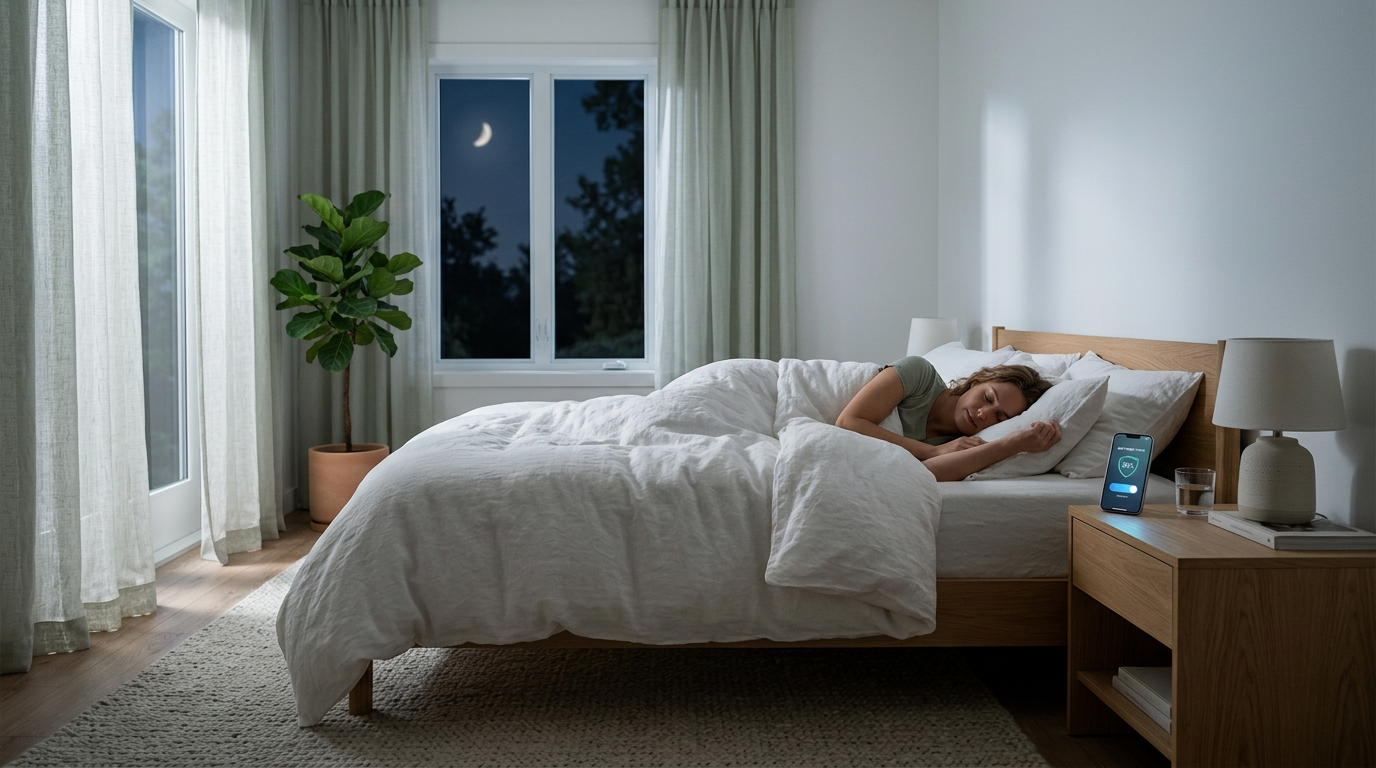
The bedroom matters because it is where exposure becomes sustained. If you sleep eight hours a night, that is roughly 2,900 hours per year in one room. Even if someone remains uncertain about the science of sensitivity, nighttime reduction still stands out as the simplest place to act. You do not need full certainty to prefer a cleaner environment during the longest continuous recovery window of the day.
That practical logic is also consistent with a careful reading of the literature. The WHO does not recommend panic, and neither do we. But it does recognize that the symptoms people describe are real, that home assessments should look at other contributing environmental factors, and that autonomic or central nervous system hyper-reactivity deserves further study. That is not a call for fear. It is a call for proportion.
Take Control Of Your Home
You do not need to settle the entire EMF debate before changing your bedroom environment. Whether you identify as sensitive or not, the practical question is the same: can you reduce unnecessary nighttime transmitters, simplify the sleep environment, and make the room feel quieter?
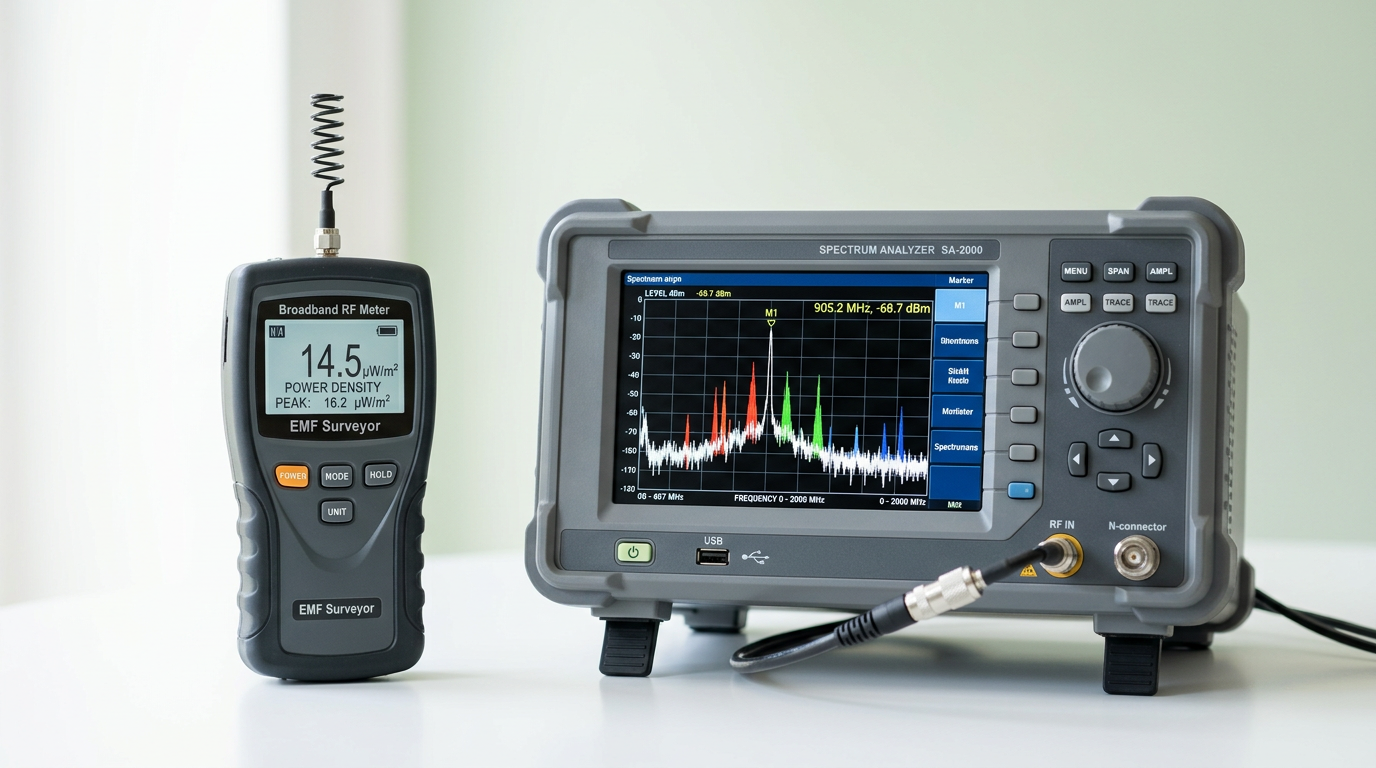
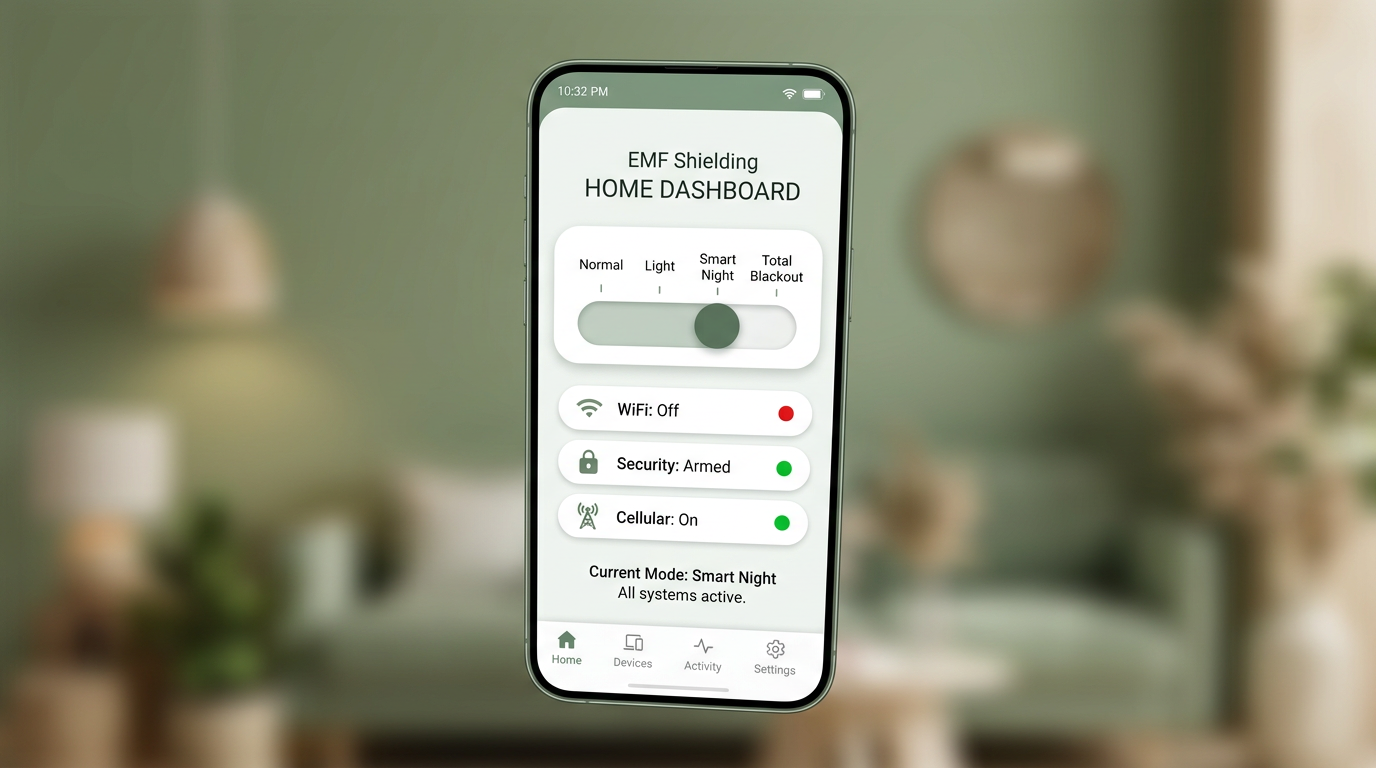
That is where NoWiFi.Rest fits. We focus on the controllable part of the problem: inventorying the wireless environment, measuring the bedrooms, turning down or turning off the transmitters that matter at night, and helping homeowners create a predictable routine that supports better sleep.
If you already feel reactive, that may matter even more to you. If you do not, the lower-risk argument is still strong: a cleaner nighttime environment is one of the few parts of modern wireless life that is both measurable and adjustable.
See whether the service is the right fit for you and your home
The first step is a short conversation to understand your setup, your goals, and whether the service is the right fit for you and your home. If we collectively decide it is not the right fit, we will do our best to suggest a better-fit next step.
Selected References
- World Health Organization. Electromagnetic hypersensitivity.
- Rubin GJ, Das Munshi J, Wessely S. Idiopathic environmental intolerance attributed to electromagnetic fields: an updated systematic review of provocation studies.
- Bijlsma N, Conduit R, Kennedy G, Cohen M. Does radiofrequency radiation impact sleep? A double-blind, randomised, placebo-controlled, crossover pilot study.
- Bueno-Lopez A, Eggert T, Dorn H, Schmid G, Hirtl R, Danker-Hopfe H. Effects of 2.45 GHz Wi-Fi exposure on sleep-dependent memory consolidation.
- Treatments for Long COVID autonomic dysfunction: a scoping review.
- Neurocardiac Autonomic Dysfunction in Patients With Post-COVID-19 Condition: A Systematic Review and Meta-Analysis.
- Cardiac Arrhythmias and Autonomic Dysfunction Associated With COVID-19: A Scientific Statement From the American Heart Association.
- Ashford NA, Miller CS. A review of multiple chemical sensitivity.
- Moist and Mold Exposure is Associated With High Prevalence of Neurological Symptoms and MCS in a Finnish Hospital Workers Cohort.
- Martindale C, Presson AP, Schwedt TJ, Brennan KC, Cortez MM. Sensory hypersensitivities are associated with post-traumatic headache-related disability.
- Manning KY, et al. Sensory sensitivity as a link between concussive traumatic brain injury and PTSD.
- Wiltschko R, Wiltschko W. Magnetoreception in birds.
- Guerra PA, Gegear RJ, Reppert SM. A magnetic compass aids monarch butterfly migration.
- Post-COVID-19 Vaccination (or Long Vax) Syndrome: Putative Manifestation, Pathophysiology, and Therapeutic Options.